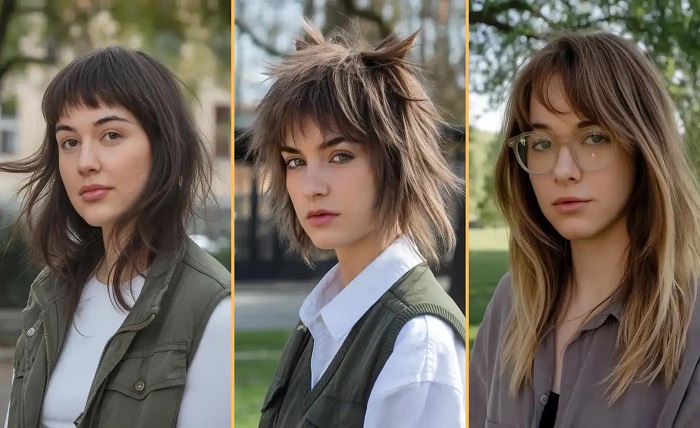
The wolfcut is a bold, edgy hairstyle that blends elements of a shag haircut and a mullet, creating a layered, voluminous look that feels both retro and modern. The wolfcut is defined by heavy layers on top and thinner, wispy ends, giving it a wild, untamed aesthetic that resembles a wolf’s mane—hence the name wolfcut. This hairstyle has gained massive popularity due to its versatility and effortless vibe, making the wolfcut a go-to choice for people seeking a low-maintenance yet stylish haircut. wolf cut women
The beauty of the wolfcut lies in its adaptability across hair types and lengths, allowing individuals to personalize the wolfcut according to their face shape and personality. Whether worn sleek or messy, the wolfcut adds texture and movement, making it stand out among contemporary hair trends.
The Origin and Rise of the Wolfcut Trend
The wolfcut has roots in vintage hairstyles, particularly the shag cuts of the 1970s and the mullet styles of the 1980s, but the modern wolfcut gained traction through social media platforms like TikTok and Instagram. Influencers and hairstylists showcased their transformations, turning the wolfcut into a viral sensation that resonated with Gen Z and millennials alike.
The wolfcut became especially popular during global lockdowns, when many people experimented with DIY haircuts at home, leading to a surge in creative styles like the wolfcut. This trend reflects a shift toward individuality and self-expression, with the wolfcut symbolizing rebellion against traditional, polished hairstyles.
Why the Wolfcut is So Popular
The wolfcut has captured attention worldwide because it combines style, ease, and personality in a single haircut. One of the main reasons for the wolfcut’s popularity is its effortless look—it doesn’t require perfect styling to appear fashionable. In fact, the slightly messy appearance enhances the wolfcut’s charm.
Another reason the wolfcut is trending is its inclusivity; the wolfcut works on straight, wavy, and curly hair, making it accessible to a wide audience. Additionally, the wolfcut allows people to express their edgy or artistic side without committing to extreme changes, making it a safe yet bold choice.
Different Types of Wolfcut Styles
There are several variations of the wolfcut, each offering a unique twist on the classic look. The short wolfcut is perfect for those who want a lightweight, manageable style, while the long wolfcut provides more dramatic layers and movement. The curly wolfcut enhances natural curls, giving them structure and bounce.
Another popular version is the soft wolfcut, which tones down the extreme layers for a more subtle appearance, making the wolfcut suitable for professional settings. On the other hand, the dramatic wolfcut features sharper contrasts between layers, creating a more rebellious and eye-catching look.
How to Ask Your Stylist for a Wolfcut
Getting the perfect wolfcut requires clear communication with your hairstylist. When requesting a wolfcut, it’s important to mention that you want heavy layers on top and tapered ends at the bottom. Bringing reference photos can help ensure your stylist understands the exact wolfcut style you’re aiming for.
You should also discuss your hair type and face shape with your stylist, as these factors influence how the wolfcut will look on you. A professional stylist can customize the wolfcut to enhance your features, ensuring that the final result complements your overall appearance.
Styling Tips for Maintaining a Wolfcut
Maintaining a wolfcut is relatively simple, which adds to its appeal. To style a wolfcut, you can use texturizing spray or mousse to enhance the layers and create volume. Blow-drying with a diffuser can help bring out the natural texture, especially for those with wavy or curly hair.
For a more polished look, you can straighten parts of the wolfcut while keeping the ends slightly tousled. Regular trims are essential to keep the wolfcut looking fresh and prevent the layers from becoming uneven. Overall, the wolfcut thrives on a slightly messy, lived-in look, so perfection is not required.
Who Should Try a Wolfcut?
The wolfcut is suitable for a wide range of people, regardless of age or gender. If you enjoy bold, trendy hairstyles, the wolfcut is an excellent option. It works particularly well for individuals with medium to thick hair, as the layers in a wolfcut help reduce bulk while adding movement.
However, even those with fine hair can benefit from a wolfcut, as it creates the illusion of volume. The wolfcut is also ideal for people who prefer low-maintenance hairstyles, as it looks great even with minimal styling. Ultimately, the wolfcut is for anyone who wants to embrace a confident, carefree look.
Pros and Cons of Getting a Wolfcut
Like any hairstyle, the wolfcut comes with its advantages and disadvantages. One major benefit of the wolfcut is its versatility—it can be styled in multiple ways to suit different occasions. The wolfcut also adds volume and texture, making it perfect for those who want a fuller look.
On the downside, the wolfcut may require regular trims to maintain its shape, especially if you prefer a sharp, defined look. Additionally, the wolfcut may not suit very conservative environments, as its edgy style can stand out. Despite these minor drawbacks, the wolfcut remains a popular and stylish choice.
Conclusion
The wolfcut is more than just a haircut—it’s a statement of individuality, creativity, and confidence. With its unique blend of retro and modern elements, the wolfcut has become a defining trend in the world of hairstyling. Whether you prefer a subtle version or a bold transformation, the wolfcut offers endless possibilities for self-expression.
As trends continue to evolve, the wolfcut proves that unconventional styles can become mainstream while still retaining their originality. If you’re looking to refresh your look with something trendy yet practical, the wolfcut might be the perfect choice for you.
FAQs
1. What makes the wolfcut different from other hairstyles?
The wolfcut stands out because of its layered structure and combination of shag and mullet elements, giving it a unique, edgy appearance.
2. Is the wolfcut suitable for all hair types?
Yes, the wolfcut works on straight, wavy, and curly hair, although the final look may vary depending on texture.
3. How often should I trim a wolfcut?
To maintain the shape of your wolfcut, it’s recommended to get a trim every 6–8 weeks.
4. Can I style a wolfcut without heat tools?
Absolutely, the wolfcut looks great with natural texture, and products like mousse or texturizing spray can enhance its appearance.
5. Is the wolfcut easy to maintain?
Yes, the wolfcut is considered low-maintenance, making it ideal for people who want a stylish look without spending too much time on hair care.